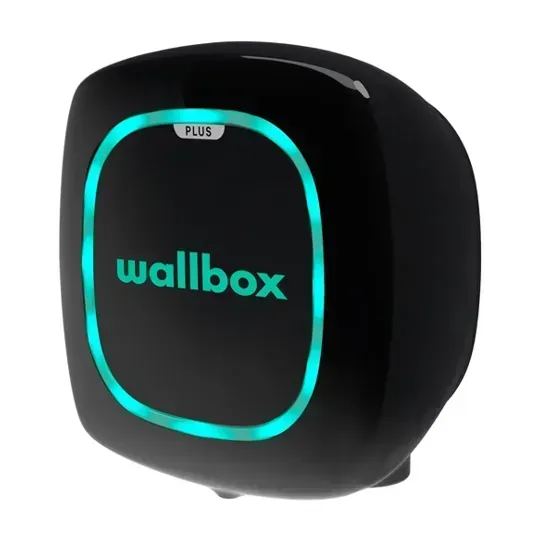




































































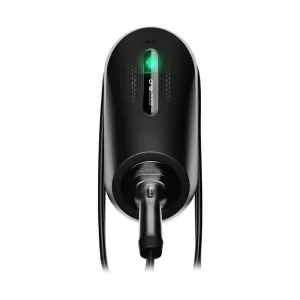
ZAPPI3AS07T-G
In stock
Net Price:
£441.60
Gross Price:
£529.91
Free shipping for orders over £60 (incl. VAT)
 Switchgear & Distribution
 Consumer Distribution Boards
 MCB - Miniature Circuit Breakers
 RCBO - Residual Current Breakers
 RCD - Residual Current Device
 MCCB - Moulded Case Circuit Breakers
 Auxiliary Contact Blocks
 Modular Contactors
 Busbar
 Enclosures & Combination Units
 Time Clocks & Controllers
 Energy Meters
 Surge Arresters
 Isolators & Changeover Switches
 Capacitors
 Transformers
 Toggle Switches
 Relays & Probes
 Potentiometers
 Phase Failure Relays
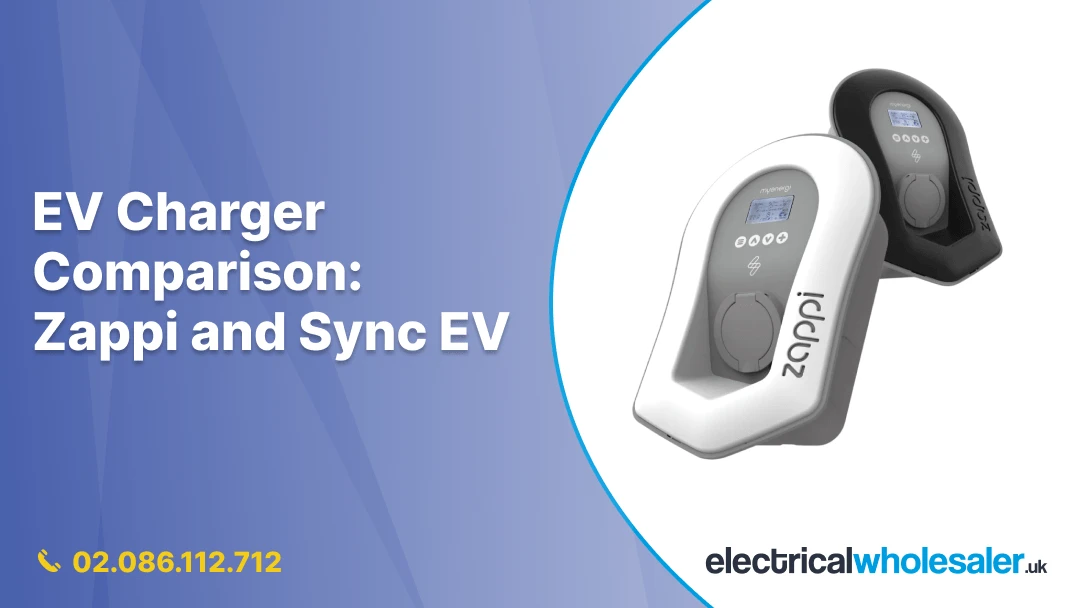
EV charger installs are a solid part of the workload now for most electrical contractors in Ireland and the UK. The chargers themselves have got genuinely interesting — smart scheduling, solar integration, load balancing, OCPP connectivity. Knowing what’s on the shelf and what the key differences are saves time when you’re spec’ing a job or answering a customer’s questions.
This is a product overview of the Zappi and Sync EV chargers we stock. It’s not installation guidance or a compliance checklist — for project-specific requirements, your qualified electrician or engineer and the current published standards are the right port of call.
Installations in the UK, BS 7671 (the IET Wiring Regulations) is the baseline for electrical installation work. On top of that, the Smart Charge Points Regulations 2021 set specific requirements for chargers sold in Great Britain — things like default off-peak scheduling, randomised start delays, and cybersecurity controls. The Public Charge Point Regulations 2023 add further requirements around transparency and reliability for public charging. Part S of the Building Regulations (England, from June 2022) generally references EV chargepoint provision or cable routes in new residential builds and certain renovation projects.
In Ireland are generally carried out under ET101 (the National Rules for Electrical Installations), which covers safe electrical integration broadly. EU frameworks like the Alternative Fuels Infrastructure Regulation (AFIR) are shaping the wider infrastructure picture, with Ireland targeting significant EV fleet growth by 2030.
Harmonised standards like IEC 61851 and IEC 62196 cover electrical safety and connector types across both markets. At time of writing, the UK is also moving toward wider adoption of ISO 15118 and OCPP 2.1 in the coming years — worth keeping an eye on if you’re spec’ing for longevity.
None of that is a compliance checklist. It’s context. Always refer to the current published edition of the relevant standards, and defer to your engineer or building control officer for anything project-specific.
It’s worth being clear that a modern smart EV charger is a fair bit more than a glorified socket. The units we’re talking about here are Mode 3 chargers — meaning they communicate actively with the vehicle during charging via the Type 2 connector, rather than just supplying power passively.
The smart layer on top handles things like scheduling around off-peak tariffs, reading generation data from solar or wind, adjusting charge rate dynamically based on what’s available, and connecting to backend systems via OCPP (Open Charge Point Protocol). That last one matters more and more as commercial installs and fleet charging come into play.
DC fault protection is built into both product ranges we stock — relevant because a standard AC RCD won’t catch a DC fault in the charging circuit. Both ranges are rated IP65 for weatherproofing, per manufacturer datasheets, and carry IK10 impact resistance ratings. Outdoor installs in Ireland and the UK will test both of those over time.
The Zappi is probably the best-known smart home charger in the UK and Irish market right now, largely because of its solar integration credentials. myenergi built the Zappi to sit inside their own ecosystem alongside the eddi energy diverter and libbi battery — so for customers who have or are planning solar PV, it’s a natural conversation.
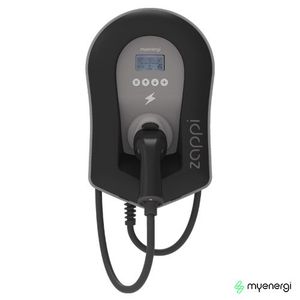
This is the entry point in the Zappi range we carry. Single-phase, 7kW, tethered with a 6.5m Type 2 cable. It’s the residential workhorse — the one most domestic installs will call for.
A few things worth knowing about it. The 6mA DC residual current protection (RDC-DD, per EN 62955) is integrated — that’s the DC fault detection handled on-board rather than relying on an external device. Dynamic load balancing is available as an optional feature, which is useful where the supply capacity is tight. It takes up to two external current transformers for monitoring, which opens the door to basic solar-aware charging even on this model.
OCPP 1.6J is supported, but worth noting it runs via the myenergi cloud backend — it’s not available for offline or local use. That’s a relevant consideration for commercial jobs where local OCPP operation might be a requirement.
Connectivity covers Wi-Fi (2.4GHz), Bluetooth Low Energy, and a proprietary 868MHz radio for talking to other myenergi devices. RFID card access is included. The -G suffix on the product code indicates the GB compliance variant, which includes integrated PEN fault protection compliant with BS 7671 — that detail matters for UK installs specifically.
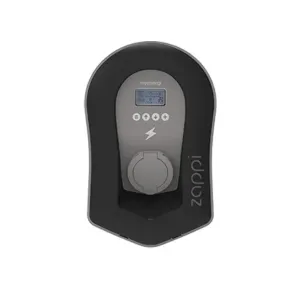
This is where the Zappi gets more interesting. The 2H series covers both single-phase 7kW and three-phase 22kW configurations in the same unit — the phase configuration is determined at install. That flexibility is genuinely useful for commercial or future-proofed residential jobs.
The headline feature is the three charging modes: ECO, ECO+, and FAST. ECO mode uses surplus generated energy alongside grid supply to maintain a minimum charge rate. ECO+ goes further — it will throttle right back and charge only from surplus generation if available, dropping to zero import if needed. FAST mode ignores generation entirely and charges at maximum rate. For customers with solar PV, that’s a meaningful distinction.
The 2H series adds an Ethernet port alongside Wi-Fi, a graphical backlit LCD display, and three CT inputs — two bi-directional, one uni-directional for generation/solar monitoring. The eSense input allows integration with external signals like an economy tariff meter output or a volt-free contact.
Both tethered (ZAPPI2H22TBG) and untethered (ZAPPI-2H22UB-G) variants are available. Tethered has the 6.5m cable fixed to the unit; untethered has a Type 2 socket with locking system for use with any compatible cable. The choice usually comes down to the site and the customer’s preference.
Carries both UKCA and CE marking, and references compliance with the UK EV Smart Charge Points Regulations — relevant for GB installs. Per the manufacturer datasheet at time of writing.
£441.60
£529.91
£700.52
£840.63
£677.26
£812.71
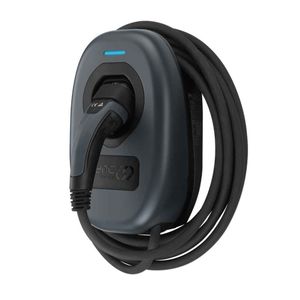
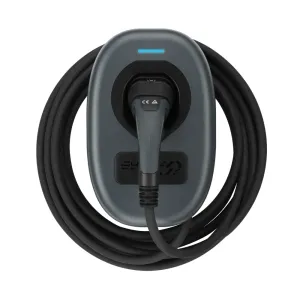
Sync Energy is a newer name in the Irish market but they’ve made an impression. The Wall Charger 2 is a single-phase 7.4kW unit — the slightly higher rating compared to a standard 7kW comes from running at 32A on a 230-240V supply.
It’s tethered, with a 7.5m Type 2 cable — slightly longer than the Zappi’s 6.5m, which is occasionally relevant on tighter installations. The physical dimensions are more compact than the Zappi 2H series, which can matter on a busy consumer unit board or a retrofit where space is at a premium.
The Sync EV has its own smart feature set worth being aware of. Tariff Sense is their energy management function — it can schedule charging around time-of-use tariffs automatically. Auto solar charging integrates with PV generation data. Load balancing is included as standard with a supplied load management kit, rather than being an optional add-on.
On the protection side: 30mA AC Type A RCD plus 6mA DC fault detection are both built in — so it’s carrying the full protection stack internally. PEN fault protection is integrated with earth disconnection. Metering accuracy is quoted at Class C equivalent internally, with an option for an external RS485 Modbus meter for higher accuracy applications.
Connectivity: Wi-Fi (2.4GHz), Ethernet via RJ45, Bluetooth 4.2, and OCPP 1.6J. Firmware updates are over-the-air. The unit carries CE and UKCA marking and references compliance with the Smart Charge Points Regulations 2021 per the manufacturer’s documentation at time of writing.
One practical detail: the Sync EV has built-in cable management — a cable wrap and gun holster on the unit itself. Small thing, but on a busy domestic garage wall it makes a difference to how tidy the finished job looks.
£448.06
£537.67
£340.35
£408.42
| Zappi GLO 7kW | Zappi 2H 7/22kW | Sync EV WC2 7.4kW | |
|---|---|---|---|
| Max Output | 7kW | 7kW / 22kW | 7.4kW |
| Phase | Single | Single / Three | Single |
| Cable | Tethered 6.5m | Tethered or Untethered | Tethered 7.5m |
| Solar Integration | Via CTs | ECO / ECO+ / FAST modes | Auto solar charging |
| Load Balancing | Optional | Optional | Included (kit supplied) |
| OCPP | 1.6J (cloud only) | 1.6J (cloud) | 1.6J |
| Ethernet | No | Yes | Yes (RJ45) |
| DC Fault Protection | 6mA RDC-DD | 6mA RDC-DD | 6mA DC + 30mA AC Type A |
| PEN Fault Protection | Yes (-G models) | Yes (-G models) | Yes (built-in) |
| Display | LED status | Graphical LCD | RGB LED + buzzer |
| IP Rating | IP65 | IP65 | IP65 |
| IK Rating | IK10 | IK10 | IK10 |
| OTA Firmware | Via app | Via app | Yes |
These aren’t recommendations — they’re things that tend to come up in conversation on site or at the spec stage.
Supply capacity is usually the first question. A 7kW charger draws 32A continuously, which sits alongside everything else on the property’s supply. Dynamic load balancing is available across the chargers we stock, and it’s a feature worth understanding when discussing options with customers whose supply headroom is limited.
Connectivity at the install location is easy to overlook. These chargers rely on Wi-Fi or Ethernet for smart features, scheduling, and firmware updates. Garages and external walls don’t always cooperate with a router two rooms away — it’s something customers appreciate knowing about early.
Firmware is part of the product lifecycle. Both Zappi and Sync EV push over-the-air updates that cover functionality and security. A charger that’s connected and up to date is working as the manufacturer intended; one that isn’t may not be.
On-board protection features like DC fault detection and PEN fault protection are part of the product spec — they’re covered in the comparison table above. How those features sit within the wider protection scheme for a given installation is an assessment for the qualified person doing the work, under the applicable standard.
For most of the technical spec, UK and Ireland are broadly aligned — same connectors, same IP and IK expectations, same underlying IEC standards. The divergence is mainly regulatory.
In the UK, the Smart Charge Points Regulations 2021 apply to chargers sold in Great Britain, and compliance is built into the products we stock — both the Zappi -G models and the Sync EV WC2 reference this. Part S of the Building Regulations is also live for new builds and certain renovations in England — whether it applies to a specific project is a question for the building control officer or engineer on that job.
In Ireland, the Smart Charge Points Regulations don’t apply in the same form. The regulatory picture is shaped more by ET101, EU directives, and Ireland’s national EV infrastructure strategy. The AFIR framework is driving public charging expansion rather than residential mandates, and Ireland’s draft national charging strategy through to 2028 signals continued public investment in the network.
Practically speaking: if you’re working across both markets, check which compliance variant you’re ordering. The -G suffix on Zappi models indicates the GB variant with PEN fault protection per BS 7671. That’s not a cosmetic difference.
The Zappi and Sync EV ranges cover the mainstream of what residential and light commercial EV charger installs look like in Ireland and the UK right now — 7kW single-phase for homes, 22kW three-phase for commercial and future-proofed jobs, smart scheduling, solar integration, and OCPP connectivity for anything that needs backend management.
They’re not identical products. The Zappi 2H’s ECO/ECO+ modes and deep integration with the myenergi ecosystem make it the natural conversation for solar PV customers. The Sync EV Wall Charger 2 comes in slightly more compact, includes load balancing as standard, and has a slick cable management solution that’s practical on the wall. Which suits a given job is a decision for the contractor and their customer based on the site specifics.
If you’re looking to check availability or stock levels on any of these, head over to electricalwholesaler.uk.
more
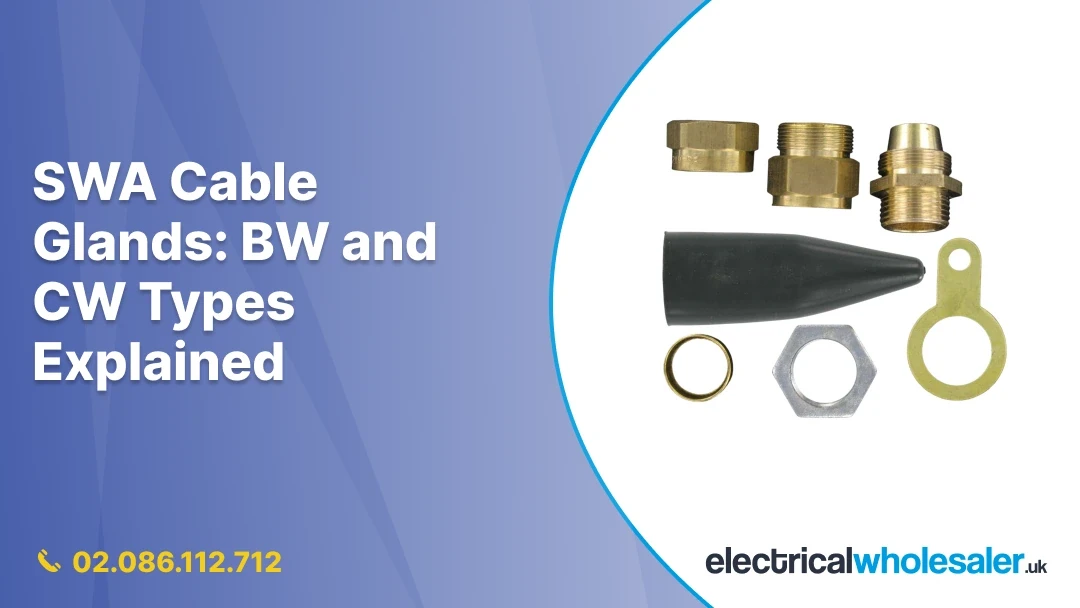
BW and CW are the two SWA cable gland types you'll see most often. They share the same size codes but seal differently, which is what determines where each one fits. A short overview of the differences, with a sizing chart by cable CSA and core count.
Read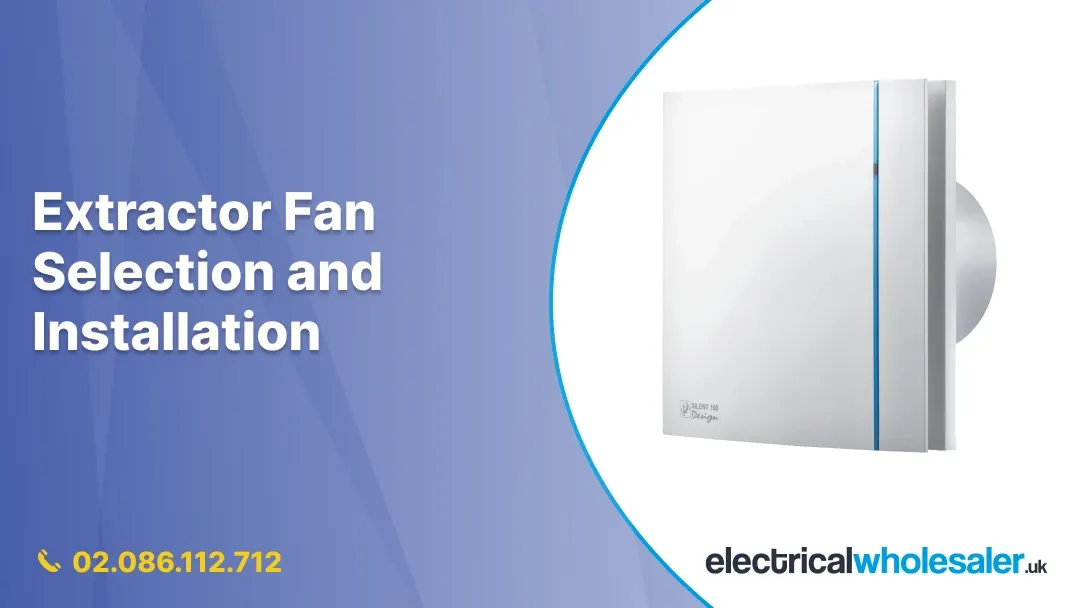
Sizing, regs, IP ratings, and common mistakes for bathroom and kitchen extractor fan installation in Ireland and the UK.
Read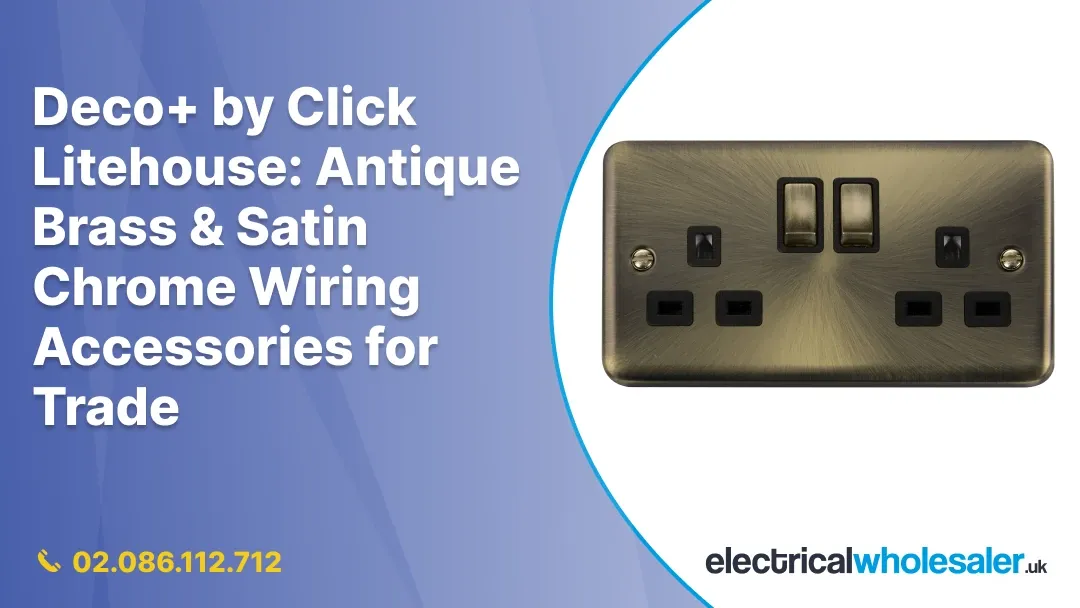
Click Deco+ offers modular sockets, switches, FCUs and media plates in antique brass and satin chrome with black inserts. Here's what you need to know before you order.
Read