














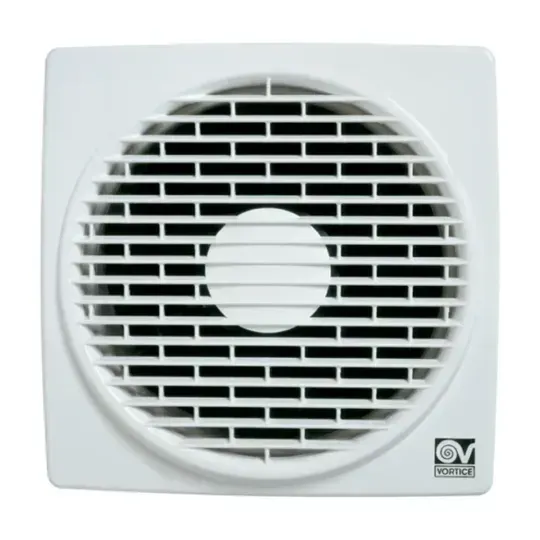



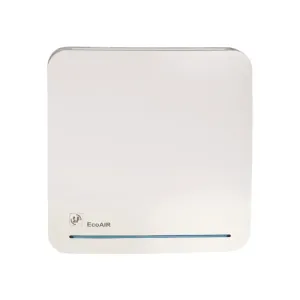
ECOAIRSLC
In stock
Net Price:
£84.56
Gross Price:
£101.47
Free shipping for orders over £60 (incl. VAT)
 Switchgear & Distribution
 Consumer Distribution Boards
 MCB - Miniature Circuit Breakers
 RCBO - Residual Current Breakers
 RCD - Residual Current Device
 MCCB - Moulded Case Circuit Breakers
 Auxiliary Contact Blocks
 Modular Contactors
 Busbar
 Enclosures & Combination Units
 Time Clocks & Controllers
 Energy Meters
 Surge Arresters
 Isolators & Changeover Switches
 Capacitors
 Transformers
 Toggle Switches
 Relays & Probes
 Potentiometers
 Phase Failure Relays
This article is intended as a general guide to help you understand the key considerations around extractor fan selection and installation. It is not a substitute for professional advice or a replacement for the current Building Regulations. Specifications, regulations, and product standards can change — always refer to the latest edition of the relevant Building Regulations (Part F for Ireland/Northern Ireland, Approved Document F for England) and consult a qualified building services engineer or electrician for your specific project requirements.
Extractor fan selection involves more than picking a unit off the shelf. The extract rate, IP rating, duct configuration, and controls all need to work together — and they all fall under Building Regulations. Getting any of these wrong can lead to issues at inspection, long-term condensation problems, or in more serious cases, safety concerns around flue gas spillage in rooms with combustion appliances.
This guide covers the key considerations to help you make informed decisions when specifying and sourcing extract ventilation for your projects.
The following is a summary of key requirements at time of writing. Regulations are updated periodically — always verify against the current published edition for your specific project.
Part F of the Irish Building Regulations (S.I. No. 504⁄2000, as amended) and Northern Ireland’s Technical Booklet L set out minimum extract rates for intermittent systems. At time of writing, Table 3.2 references rates such as:
These regulations generally require a 15-minute overrun timer on intermittent extract systems, with activation via light switch or automatic control. Internal rooms without an external wall typically require mechanical extract and a permanent air inlet — Part F references a minimum free area of 9,000 mm².
There are additional considerations where open-flued appliances are present, including restrictions on fan capacity and requirements for spillage testing. This is an area where your gas safe engineer and building control officer should be consulted directly — the specifics depend on the appliance type and installation context.
The extract rate requirements are broadly similar, with some practical differences — for example, where a cooker hood discharges externally, the kitchen rate may be lower. Approved Document F also provides for continuous mechanical extract as an alternative to intermittent.
The 2022 update introduced a Specific Fan Power (SFP) requirement under Part L, which affects product selection — it’s worth checking the spec sheet against current SFP limits before ordering.
Approved Document F generally applies to new builds, extensions, and material alterations — adding a bathroom would typically fall within scope. Your building control officer can confirm applicability for a specific project.
The regulated minimum extract rate is the starting point, but real-world performance depends on room volume, usage patterns, and duct run characteristics. For example, a standard bathroom with a short 100 mm duct run is a relatively simple specification. A kitchen without an external extract hood will typically require a higher capacity — at those airflow rates, an inline fan is often more practical than a wall-mounted axial unit.
Duct length, bends, and termination type all reduce effective airflow — performance losses of 20–50% on a poor duct run are not uncommon. Most manufacturers publish installation performance data that accounts for these factors, which is worth reviewing when selecting a unit.
Fans installed in or near wet areas need an appropriate IP rating. Bathroom zones as defined in the wiring regulations (BS 7671) each carry different minimum IP requirements — for instance, IPX4 is commonly referenced for general bathroom use, with higher ratings in zones closer to water sources. Your electrician will determine the correct rating based on the specific zone and installation context.
Even outside defined zones, moisture exposure should be considered — the product datasheet is a more reliable reference than packaging labels.
Noise levels matter, particularly in bedrooms and en-suites. Quieter fans are generally rated below 30 dB(A), and manufacturers typically publish noise data at rated airflow. If noise is a priority for the project, it’s worth comparing published figures across models rather than relying on marketing descriptions like “silent” or “quiet.”
Under Part L in England, there’s a Specific Fan Power limit that applies to extract ventilation — at time of writing, ≤0.5 W/l/s for intermittent systems. Even outside England, SFP is a useful metric for comparing energy efficiency across products. Manufacturers typically include this on the spec sheet.
Duct run length, routing, and material all have a significant impact on effective airflow. Shorter, straighter runs generally deliver better performance — most manufacturer installation guides reference a maximum recommended duct length for rated airflow, typically around 3 metres of straight rigid duct.
A few factors commonly cited in installation literature:
Bends in the duct run reduce effective airflow — manufacturers often express this as an equivalent additional length per bend. Rigid duct generally outperforms flexible duct in terms of airflow resistance. Where duct passes through unheated spaces, insulation helps prevent condensation forming inside the run. External termination is typically a cowl or louvred vent, positioned to avoid recirculation from nearby air intakes.
For 100 mm fans, maintaining a consistent duct diameter throughout the run and sealing joints are both recommended in most installation guides. A backdraught shutter — either built into the fan or fitted separately — prevents reverse airflow when the fan is off.
The manufacturer’s installation manual for the specific unit will include duct run limits and any derating factors for bends and flexible sections — it’s the most reliable reference for a given product.
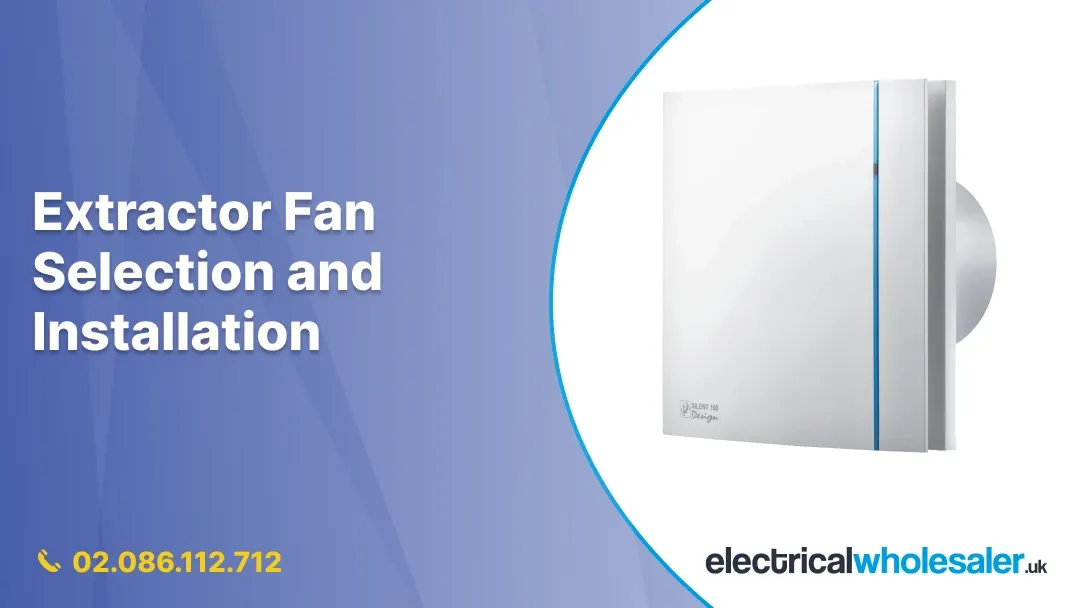
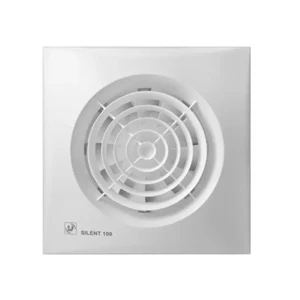
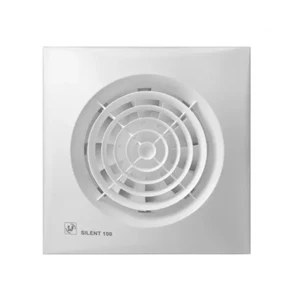
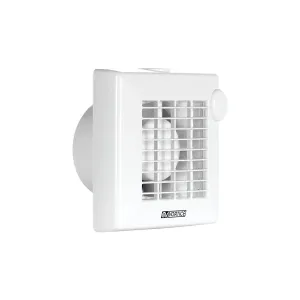
S&P Silent series — a popular choice for noise-sensitive spaces like en-suites and master bathrooms. IPX4 rated, 100 mm connection, and widely used where low noise is a priority.
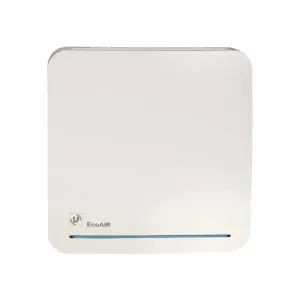
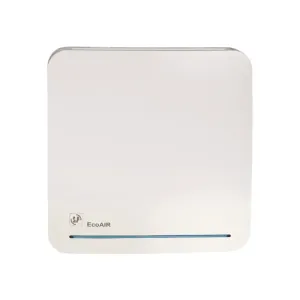
S&P EcoAIR — designed with energy efficiency in mind, often specified where SFP compliance is part of the brief. A solid general-purpose bathroom fan.
Vortice Lineo — a slimline axial unit with an IPX5 rating, which may make it suitable for installations closer to water sources depending on zone requirements. Compact profile works well where ceiling void space is limited.
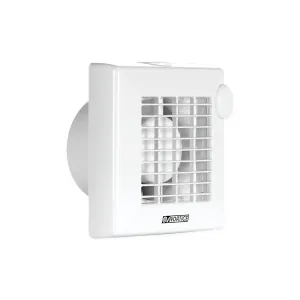
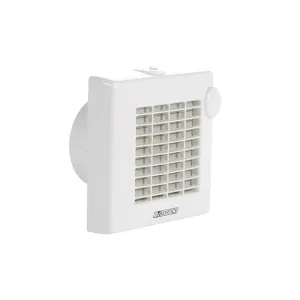
Vortice M series — modular design that allows controls (humidistat, timer, pullcord) to be configured to the installation rather than buying a fixed specification. Worth considering where flexibility is needed across different project types.
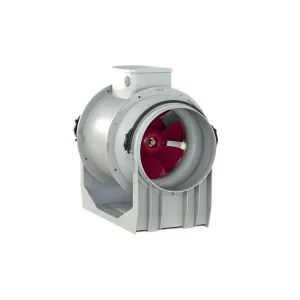
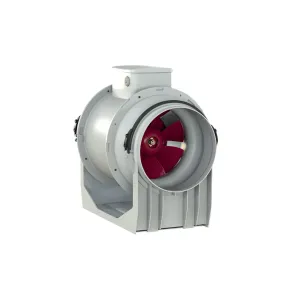
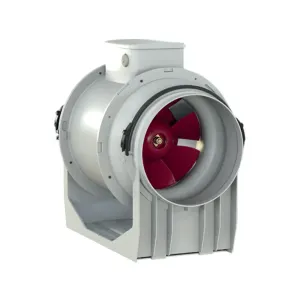
S&P TD inline range — centrifugal inline fans designed for longer duct runs, available in sizes that can deliver higher airflow rates typically associated with kitchen extract. Mounting in the ceiling void or loft space can help manage noise at the room level.
Vortice AR wall-mount — suited to kitchens with direct external wall access, allowing a short or minimal duct run. A straightforward option where the building layout supports through-wall discharge.
Overrun timers are generally required under Irish and Northern Irish regulations for intermittent extract systems. Humidistat controls are widely regarded as good practice — they respond to actual moisture levels rather than relying solely on occupancy. Most S&P and Vortice units accept standard control accessories, but it’s worth confirming compatibility with the specific model before ordering.
£84.56
£101.47
£93.92
£112.71
£96.82
£116.19
£90.53
£108.64
£48.42
£58.10
£60.41
£72.50
£103.31
£123.97
£128.61
£154.33
£90.15
£108.18
£102.42
£122.90
£63.49
£76.19
£17.77
£21.33
Undersizing. Fans are sometimes selected based on marketing descriptions rather than rated airflow figures. It’s worth checking the technical datasheet against the extract rate your project requires — the headline specification on the box doesn’t always tell the full story.
Long or uninsulated flexible duct. Flexible duct over longer runs can significantly reduce effective airflow, and uninsulated duct through cold spaces is a common cause of condensation problems. Manufacturer installation guides typically recommend rigid duct and insulation where appropriate.
Missing overrun timer. In Ireland and Northern Ireland, Part F generally requires an overrun timer on intermittent extract systems. It’s a detail that’s easy to overlook but can come up at sign-off.
Recirculating cooker hoods. A recirculating hood with a charcoal filter is not generally considered mechanical extract for Building Regulations compliance — most interpretations require external discharge. Worth confirming with building control if there’s any ambiguity on a specific project.
Open-flued appliances in adjacent rooms. Where gas fires or boilers with open flues are present near an extract fan, there are specific safety considerations around flue performance and carbon monoxide risk. This is an area where your Gas Safe registered engineer should be involved — the interaction between extract ventilation and combustion appliances is a specialist assessment.
IP rating selection. Bathroom zones each carry minimum IP rating requirements under the wiring regulations. Fitting a fan with an insufficient IP rating for its zone is a common reason for sign-off issues. Your electrician can confirm the correct rating based on the installation location.
The extract rates are broadly aligned. The differences tend to be in the detail.
Ireland and NI regulations generally require a 15-minute overrun timer and reference a permanent air inlet for internal rooms. The UK framework allows more flexibility on passive ventilation alternatives for non-internal rooms and places greater emphasis on whole-dwelling ventilation strategies and Specific Fan Power under Part L.
Post-Brexit, UK products carry UKCA marking while the Irish market uses CE marking under EU harmonised standards. For fans, EN 13141 covers performance testing and both markets reference EN 60335-2-80 for safety. In practice, most major brands — S&P, Vortice — carry both markings. It’s worth confirming marking requirements for the relevant jurisdiction, particularly on compliance-critical projects where building control sign-off is involved.
There are a few checks worth running through before closing out an install: confirming the extract rate meets the project requirements, accounting for any duct run losses, verifying the IP rating is appropriate for the installation zone, and ensuring any required controls like overrun timers are in place.
Commissioning with an airflow meter is good practice — rated performance on paper and actual installed performance aren’t always the same thing, and a quick measurement gives confidence that the system is delivering what was specified.
S&P and Vortice ranges covering a wide range of applications are stocked at electricalwholesaler.uk. If you need a specific model or want to confirm availability, the team can help.
more
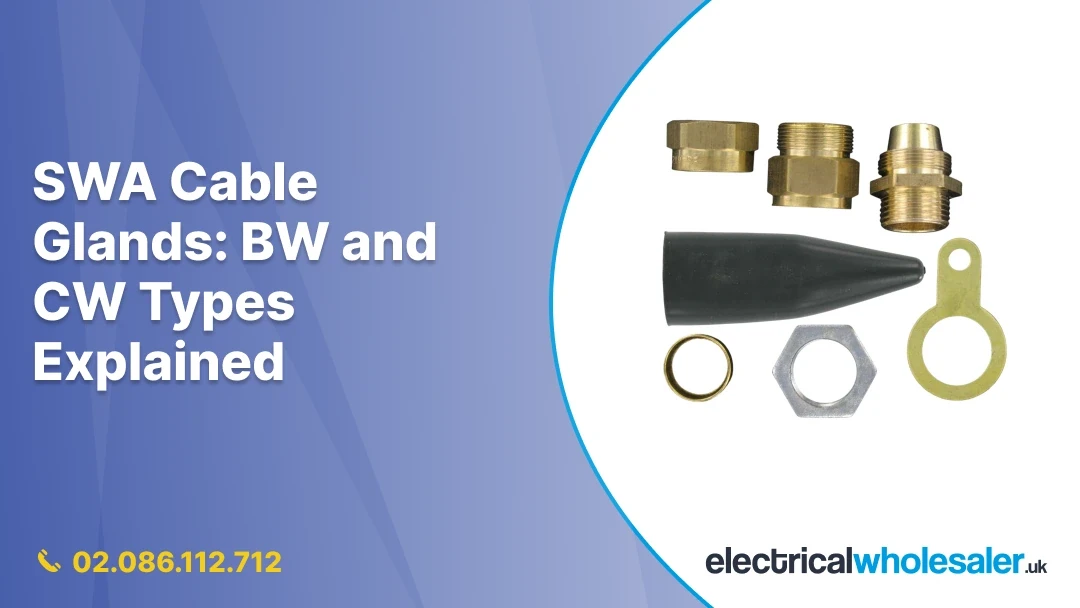
BW and CW are the two SWA cable gland types you'll see most often. They share the same size codes but seal differently, which is what determines where each one fits. A short overview of the differences, with a sizing chart by cable CSA and core count.
Read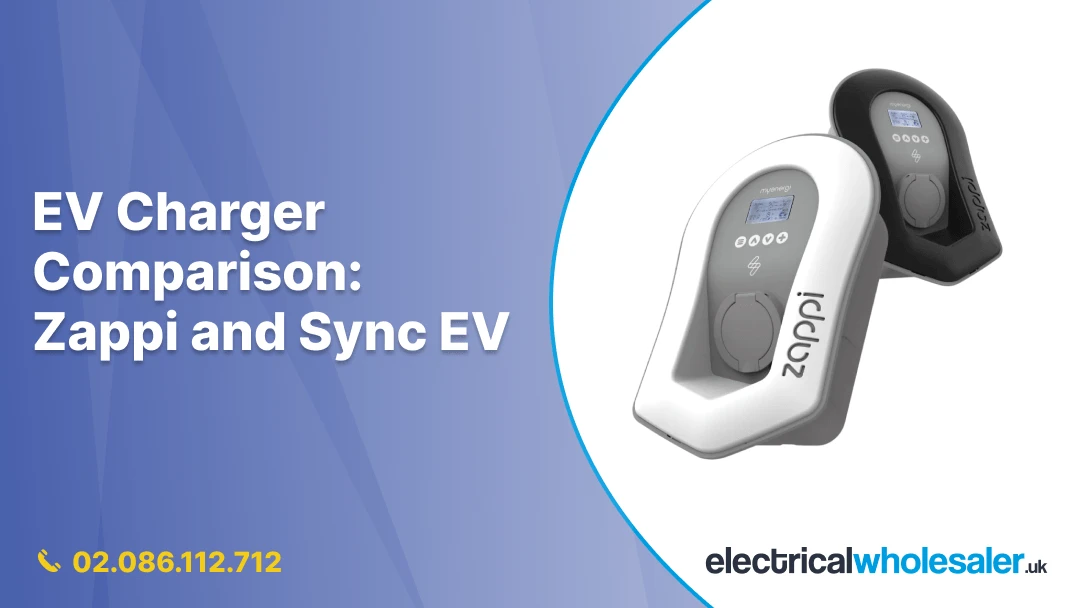
A trade overview of the Zappi and Sync EV chargers we stock — specs, smart features, and what to consider for home and workplace installs in Ireland and the UK.
Read
Click Deco+ offers modular sockets, switches, FCUs and media plates in antique brass and satin chrome with black inserts. Here's what you need to know before you order.
Read